
Writing the content that gets a niche marketplace found
Search-first content for the only marketplace built for functional glass art, from category and artist pages to long-form buyer's guides, in a category social platforms actively suppress.
The problem
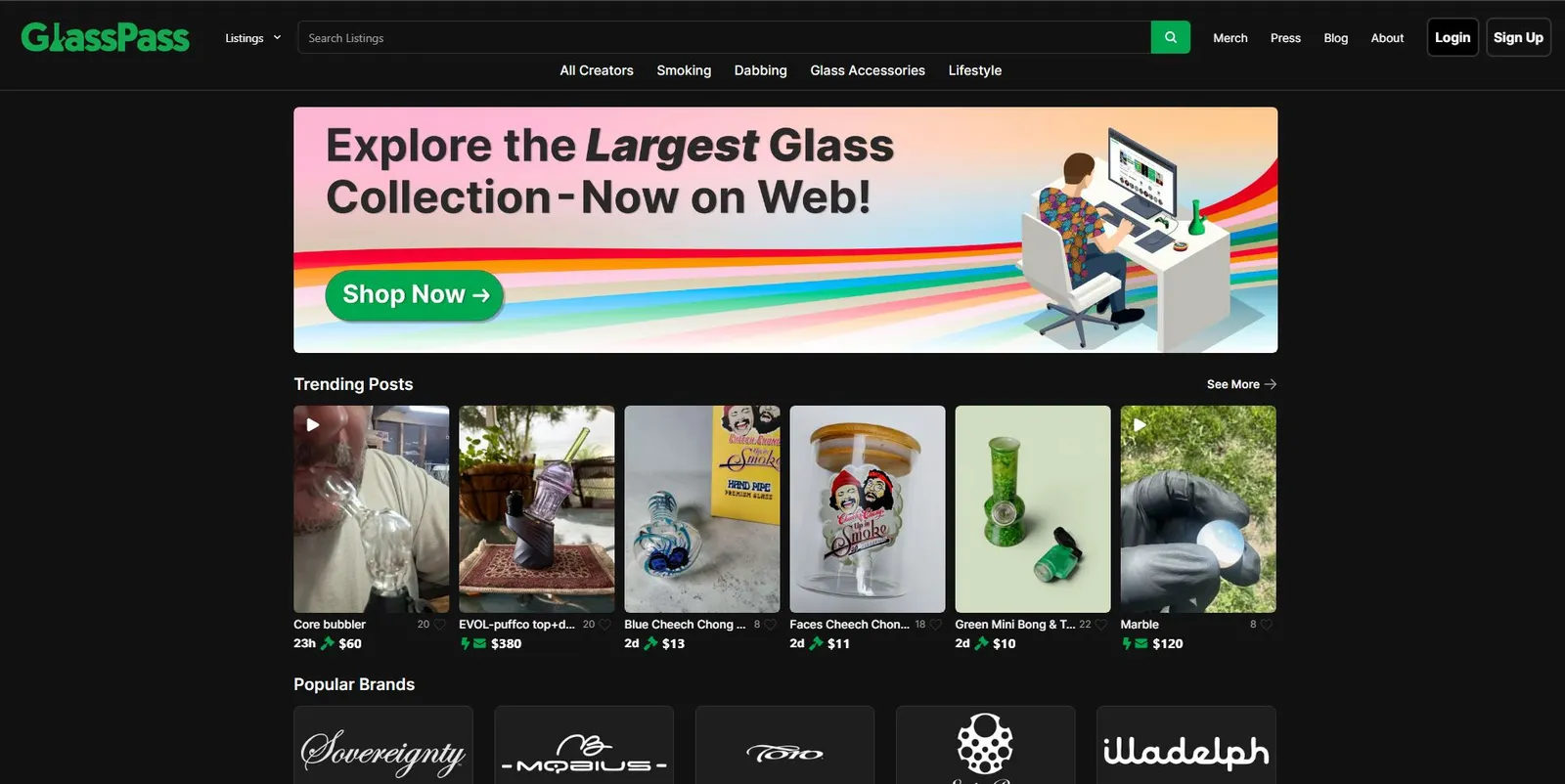
GlassPass is a marketplace for heady glass: hand-made functional glass art from named artists, with tens of thousands of listings. The category has an unusual handicap. Instagram and the other social platforms suppress glass content, so the audience a brand would normally reach through social has to be reached through search instead. For GlassPass, ranking is not a growth channel. It is the channel.
A marketplace also has a content problem at scale. Every category needs a page that reads like it was written for a person, not generated from a template, and every artist needs a bio that answers what a collector types into Google: who they are, what they make, and why their pieces hold value.
What we wrote
- Category pages. Descriptions for the marketplace’s category structure, written to match how collectors search (by piece type, by function, by artist) while still reading as a store, not a keyword list.
- Artist bios. Profiles for the makers on the platform: their history, signature styles, and notable pieces. These are the pages that catch brand-name searches, and they had to be accurate enough that the collectors who know these artists would trust them.
- Long-form guides. Recent entries in the GlassPass blog, a growing library of buyer’s guides, care guides, event guides, and artist histories. Each is built for a specific search: a clear question in the title, a description that earns the click, sections that answer the sub-questions a searcher has, and article markup so search engines understand what the page is.
- Marketing copy behind the scenes. Material for campaigns and communications that never carries a byline but has to sound like the brand.
How the guides are built
Take the care guide for bongs and dab rigs. It runs about a thousand words in ten sections, each one a question a collector actually asks: how often to clean, which solution to use, how to store and transport a collection, and the mistakes that damage glass. The page has a distinct title tag, a meta description written for the result page, and structured data marking it as an article. That is the pattern across the library: useful to the reader first, legible to search engines second, and never padded.
What we can and cannot show
Search Console for glasspass.com belongs to GlassPass, so this page does not quote clicks or rankings. What it can show is the work itself, live on the site, and the approach: pick the searches that matter to a collector, write the best answer on the internet for each one, and build the page so search engines can tell.
Why it matters for your business
Most small businesses have the same problem GlassPass has, at a smaller scale. Customers search for what you do, and the business that has written the clearest answer wins the click. This is the SEO work we sell first: not tricks, but pages worth ranking.
Screenshot of the GlassPass website shown with the client’s permission. Their name and branding belong to them.
Next project SOP Studio (in-house product): Turning a phone video of a task into a written procedure
Let’s build something that pays for itself
A free 15-minute call. We look at your site, your listing, and where your hours go, then tell you what we would do first. No deck, no pressure.
Or email info@trichomedigital.com